This project explores how, after a century of work based on the notion of childhood as sacred and outside of politics, the world’s pre-eminent child rights organisation wound up cooperating in the indefinite detention of children. It proposes that immigration detention facilities and other sites of racialised violence reveal the fragility of the universal norms of childhood associated with progress in the nineteenth and twentieth centuries.
The project explores the role of Save the Children Australia in Australian-run detention centres in Papua New Guinea and Nauru from 2012-2015. Australia has been an influential pioneer in the global trend towards detention and criminalisation of asylum seekers and refugees. Save the Children’s offshore operations represent a particularly controversial example of non-governmental organisations working as service providers within this system. Yet this moment remains shadowy and poorly researched, obscured by reticence, censorship and judgement.
The project focuses on organisational decision-making and ethics, tracing the successive challenges that arose as Save the Children’s operations expanded and the organisation and its staff came into conflict with both their government employers and their own principles. As the incarceration of asylum-seeker children by democratic countries expands, this project shines a light on the compromises into which humanitarian organisations are drawn when they seek to offer care in such settings.
This research is supported by an independent scholar fellowship from the Independent Social Research Foundation, which is enabling the preparation of a book manuscript. I have published a chapter on this project:
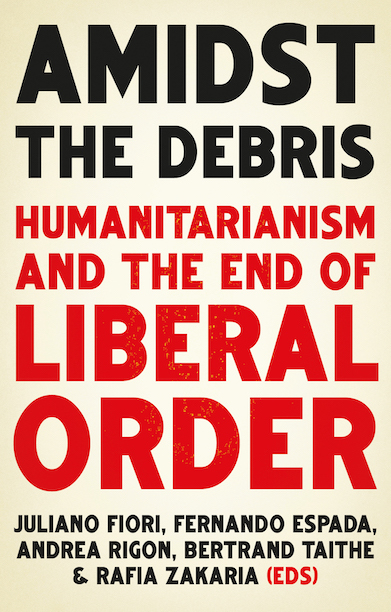
“The conscience of the island? The NGO moment in Australian offshore detention,” Amidst the Debris: Humanitarianism and the End of Liberal Order (2021), ed. Juliano Fiori, Fernando Espada, Andrea Rigon, Bertrand Taithe, and Rafia Zakaria. Hurst & Company, pp. 83-106.
 Eleanor Davey